"BPA has no effects on brain development." Oh, really?
by Nick
(Montreal)
This kind of reporting at the CanPlastics.com site makes my blood boil.
Here is how it starts:
"A new industry-funded study has found no evidence of any adverse effect on brain or neurological development in rats whose mothers were exposed to dietary doses of bisphenol A (BPA) during their pregnancy.
BPA is a chemical building block used primarily to make polycarbonate plastics and epoxy resins.
The research was funded by the Polycarbonate/BPA Global Group of the Arlington, Va.-based American Chemistry Council (ACC), and carried out by research organization WIL Research Laboratories LLC in Ashland, Ohio."
This one study, funded directly by the plastics and chemicals industry, found no connection between BPA and adverse health effects.
What does the industry do with this study? They brandish it as absolute proof that BPA is safe. No reference is made to the dozens of studies, from all over the world, which do find connections between BPA and a broad range of serious illnesses.
The article closes by saying...
“According to ACC’s Hentges, the WIL Research Laboratory findings should help lay the BPA spectre to rest once and for all. "Regulatory agencies from around the world have concluded that the science supports the safety of BPA for people of all ages in its current uses,” he said. “Plastics made with BPA contribute to the safety and convenience of everyday life because of their durability, clarity and shatter-resistance.”
This is so typical of the way the industry operates, and spins information to its advantage. According to them, this one industry-funded study, contrary to so many other studies, can “lay the BPA spectre to rest once and for all.”
This is the same strategy used by the energy companies when trying to deny global warning. They find one study, usually industry-funded, which says there is no global warming – and then use that as a lever to cast doubt on the hundreds of studies which make it clear that temperatures are rising.
It’s the same old game. Same PR strategies.
I wonder if Mr or Ms Hentges of ACC would pour his or her son or daughter a glass of BPA, based on the findings of that one study.
If not, his or her message to the rest of us is amoral.
Read the full article here...
Join in and write your own page! It's easy to do. How? Simply click here to return to In the media.
Recent Articles


-
Why the American Chemistry Council sponsored the 5th International Marine Debris Conference in Honolulu, Hawaii.
Apr 26, 18 09:58 AM
I have written before about the American Chemistry Council, and how hard it works to defend the ongoing production of all plastics, regardless of the environmental -
BPA-free food processors and blenders.
Dec 28, 16 10:21 PM
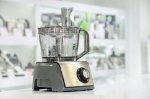 If you are looking for a BPA-free food processor or blender, you have a few choices.
 -
Alternatives to plastics in your kitchen – glass, wood, stainless steel and cera
Dec 28, 16 09:49 PM
 To keep your kitchen food-safe, BPA-free, phthalates-free and PVC-free, switch to traditional alternatives like glass, stainless steel, wood and ceramics.
